The whole idea
Arabic is not Latin script.
Most notebooks are ruled at roughly 7mm, for an alphabet that sits neatly between two lines. Arabic does not. We fit exactly 16 wide lines to an A4 page so the script has somewhere to go.
Most notebooks are ruled for Latin script. Arabic is not Latin script.
The problem with narrow ruling
Standard feint ruling sits at roughly 7mm. Arabic asks more of a line than that: letters sit below the baseline, dots stack above and below, and joining strokes need horizontal room to stay readable. Squeeze all of that into 7mm and handwriting compresses, dots collide, and practice becomes frustrating.
Our 16-line page
We fit exactly 16 wide lines to an A4 page. That gives every line noticeably more vertical space, so ascenders, descenders and diacritics all have somewhere to go.
What changes in practice
- Letter shapes stay open and legible instead of cramping
- Dots land clearly above or below the letter they belong to
- Joining strokes keep their natural length
- Corrections and vowel marks fit without crowding
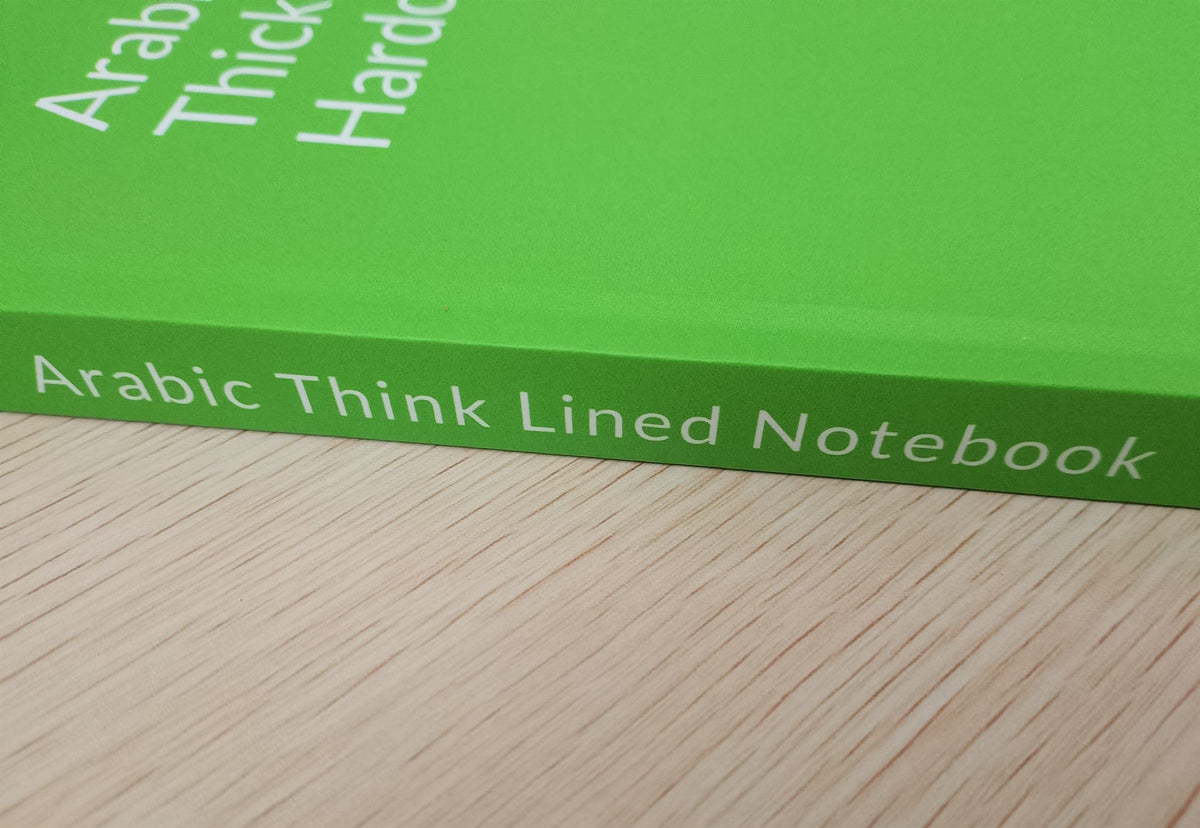

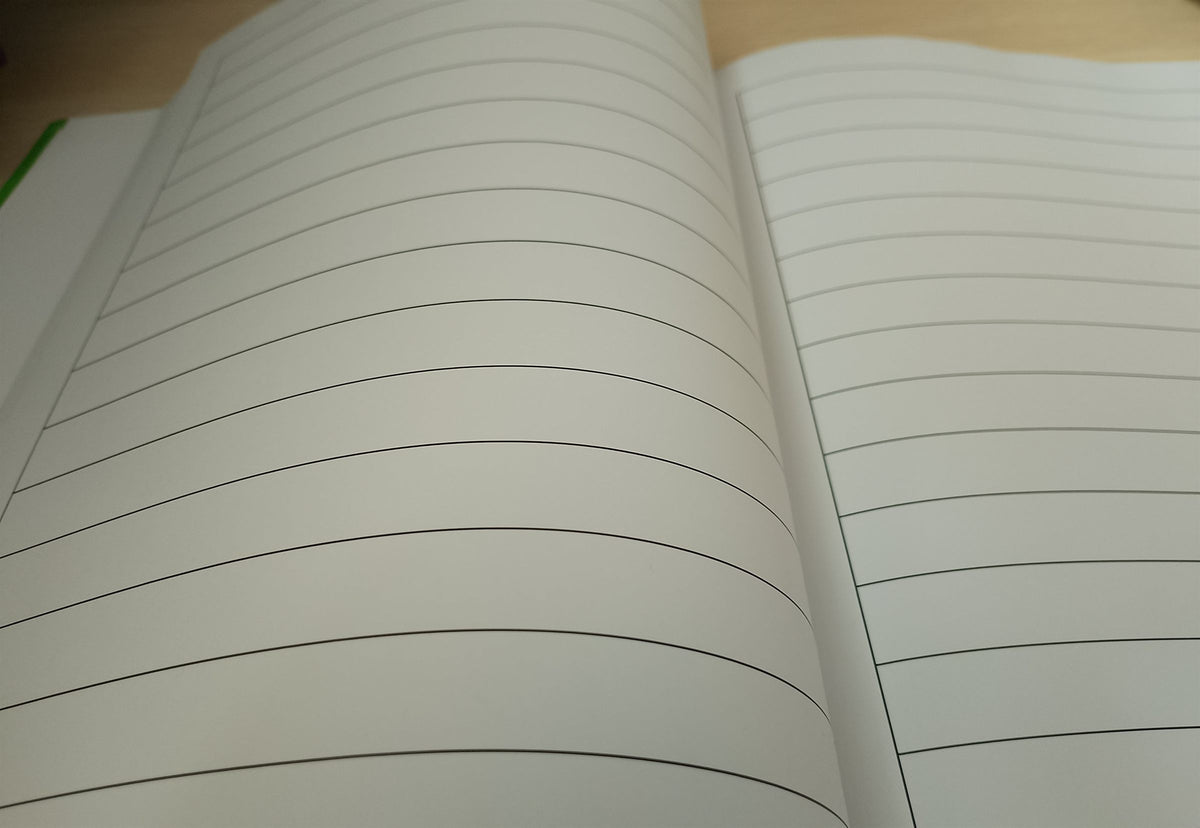
Shot on UMIDIGI Note 10S 5G
The page itself
Sixteen lines. Far more freedom.
Every line on the page is set to give ascenders, descenders and diacritics room to sit where they belong. Nothing about the paper or the size changes — only the amount of air each line of writing gets.
The problem with narrow ruling
7mm was never meant for Arabic
Standard feint ruling assumes letters that sit between two lines with the occasional tail. Arabic asks more of a line: letters drop below the baseline, dots stack above and below, and joining strokes need horizontal room to stay readable. Squeeze all of that into 7mm and handwriting compresses, dots collide, and practice turns into a fight with the page.
Paper & print quality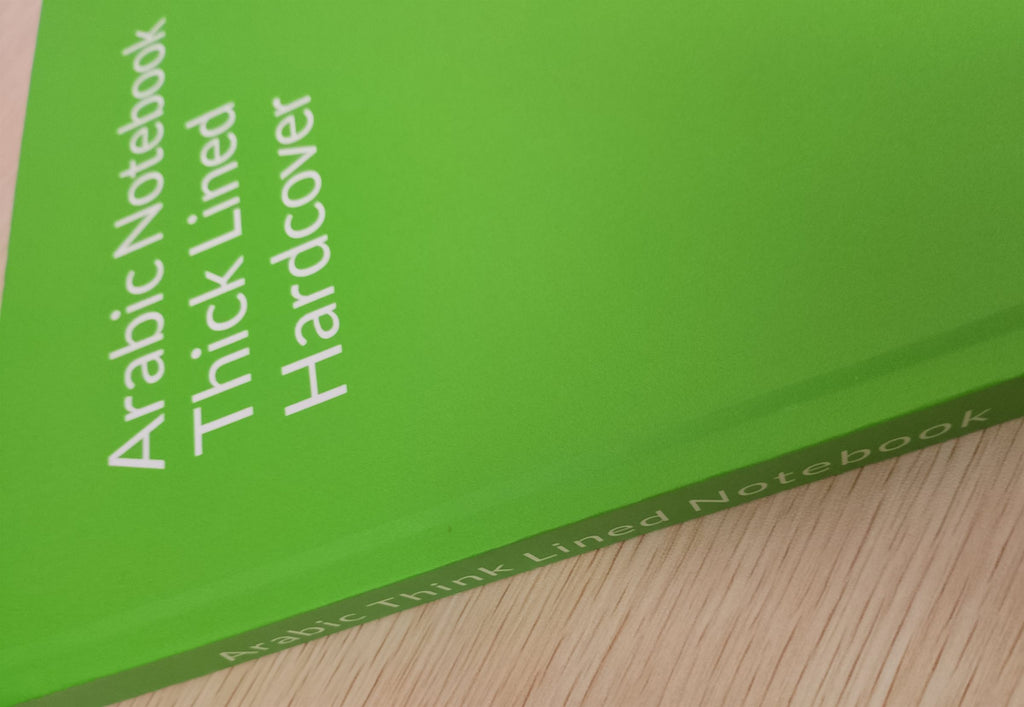
What changes in practice
Four things you notice immediately
Letter shapes stay open
Forms keep their proper proportions instead of flattening to fit the gap, so similar letters stay distinguishable.
Dots land where they belong
One, two or three dots sit clearly above or below their letter rather than colliding with the line above.
Joining strokes keep their length
Connections stay at their natural length, which is what makes a word read as a word rather than a row of shapes.
Vowel marks and corrections fit
Fatha, kasra, damma and any correction have somewhere to go without crowding the line.
Learn the letter formsQuestions about the ruling
How wide is each line?
Roughly double a standard 7mm feint rule. We set the count rather than the millimetre so the 16 lines always divide an A4 page evenly.
View detailsIs it only useful for Arabic?
No. The lines run the full width and suit any script that needs height — Urdu, Persian, or simply larger handwriting.
View detailsDo I get fewer words per book?
Fewer lines per page, but 200 pages. In practice you write more because you stop fighting the ruling.
See the specsNot sure it suits your hand?
Tell us how large you write and we will say honestly whether it will help.
Contact supportBoth formats, same page
Sixteen lines either way
Hardcover or softback, the page inside is identical. Choose the cover that matches how you study.
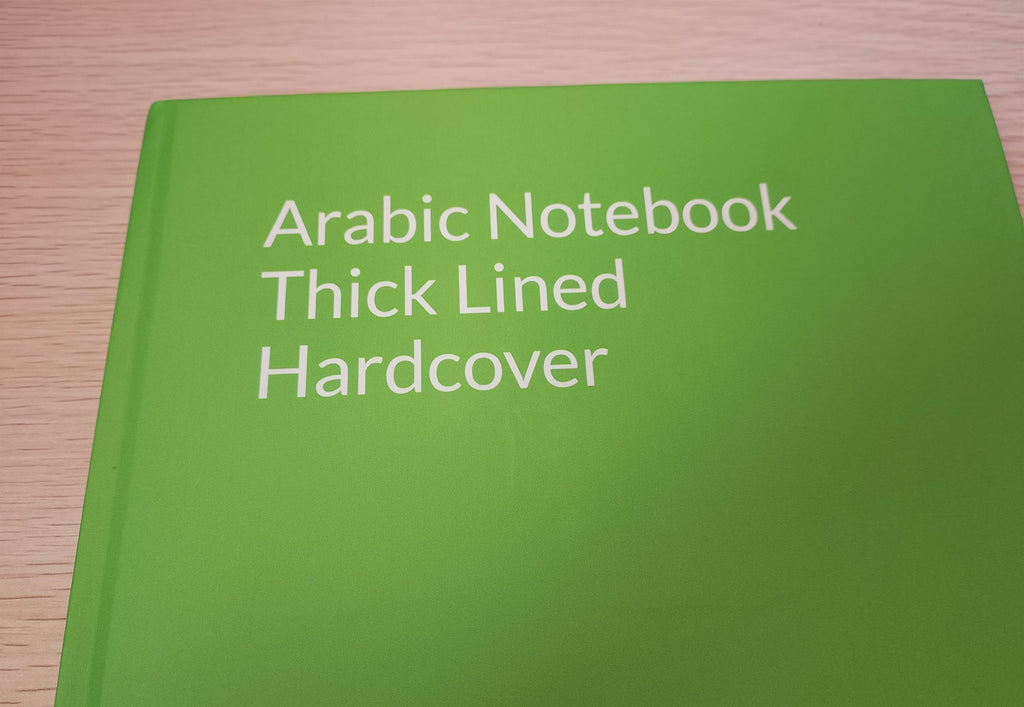
£54.00
Hardcover + Softback
Give the script the room it was designed for and legible handwriting stops being an effort.