Writing practice
Why 15 large lines make Arabic practice clearer
Arabic needs room for letters, dots and joining strokes. Here is how a purpose-built page supports clearer study notes.
Arabic needs room for letters, dots and joining strokes. Here is how a purpose-built page supports clearer study notes.
Space matters in Arabic writing
Arabic letters sit on a baseline, reach above and below, and connect with smooth strokes. Cramped lines make it harder to see the shape, place the dots and keep your writing steady.
From crowded to clear
More space between lines reduces overlap and keeps each line of writing contained. The result is cleaner notes you can read and review with confidence.
How to use a 15-line page
Our pages are designed with exactly 15 large lines. Use the full space to write clearly from start to finish, rather than treating the line as a ceiling to squeeze under.
A simple practice routine
Capture new words, practise with space, then return and remember. A clear page supports a clear habit, and a clear habit is what turns practice into recall.
Choose the format for you
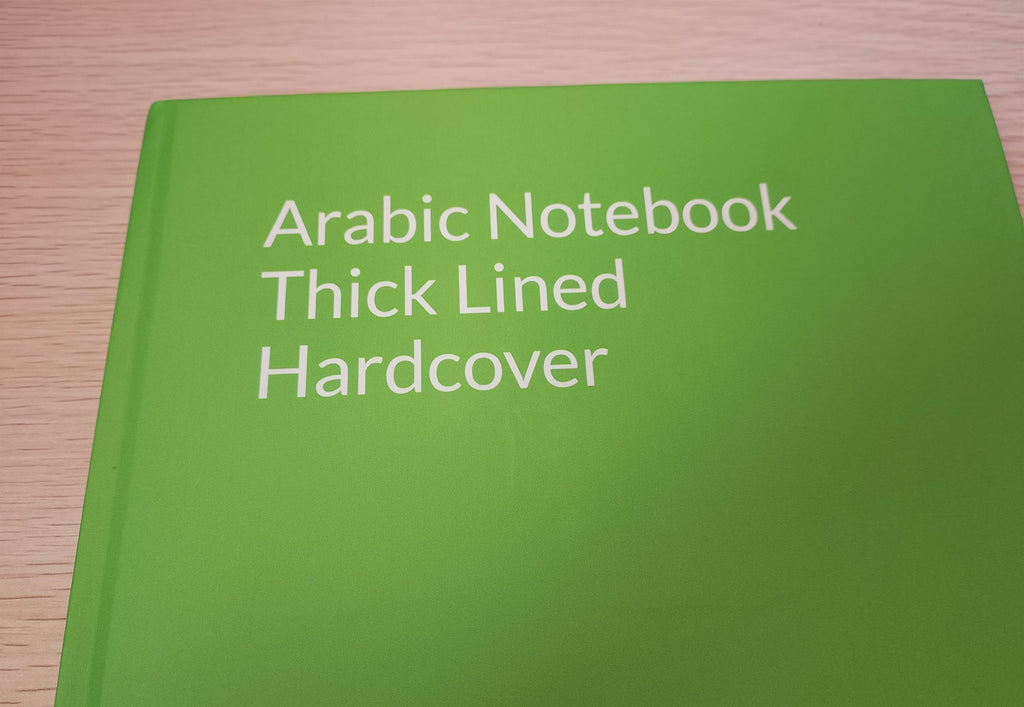
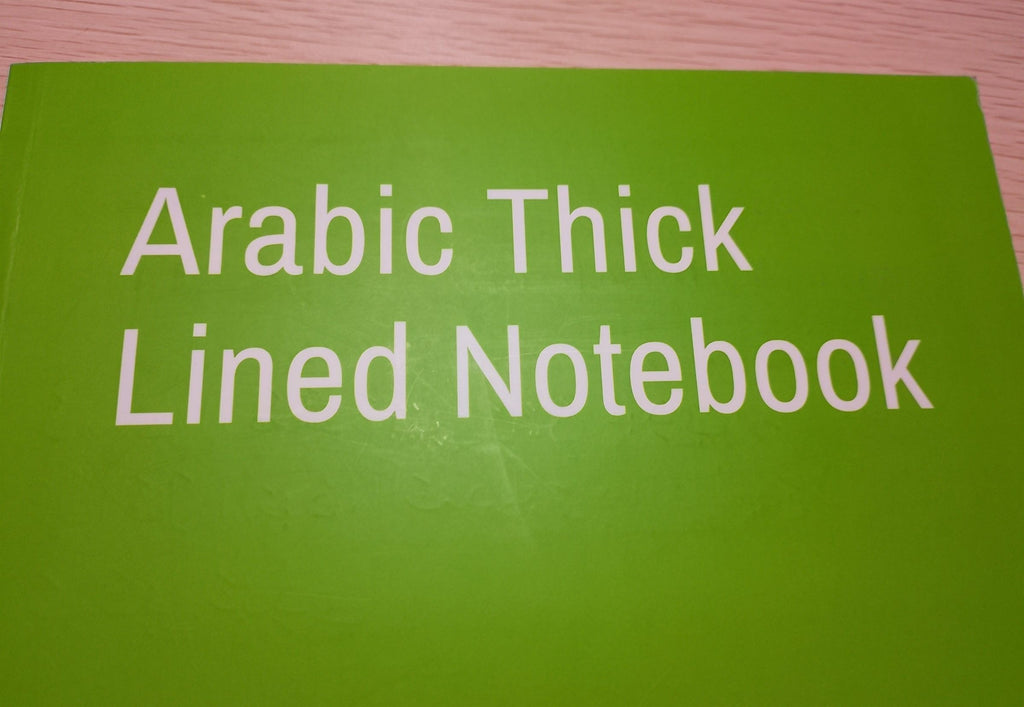
Both formats use the same 15 large lines per page. The hardcover lies flat and lasts a full year of daily use; the softback is lighter to carry between classes.